Instant purchase now available for United States customers. Click here to order.


Rest Is a Metabolic Strategy

It’s the same pattern every holiday season…
It’s one of the busiest (and most delicious) times of the year. It’s common for training volume to drop, for meal portions to expand, and for guilt levels to rise. Somewhere between the third cookie, the extra glass of wine, and the skipped workout, a familiar mindset takes hold: I’ll just make up for this in January.
But what if more rest and small, joyful indulgences weren’t something to make up for? What if it’s something your metabolism has been waiting for? And what if there was a way to approach it all with more balance and less regret?
The Body Doesn’t Just Rest, It Shifts.
When you stop training, your body doesn’t go idle — it goes to work. Recovery, adaptation, tissue repair, hormonal rebalancing — these are active metabolic processes that compete for resources with the demands of training. During periods of high output, the body is constantly triaging: fuel this workout, repair that muscle, regulate this hormone. Rest removes the triage for deeper repair and restoration.
This is why athletes who never take a true off-season often plateau or regress. The adaptations they’re training for — increased mitochondrial density, improved fat oxidation, greater aerobic capacity — require a period of reduced demand to fully express themselves. The stimulus happens in the gym. The adaptation happens at rest.
What’s Actually Happening When You Rest
Your Resting Metabolic Rate (RMR) is the number of calories your body burns to simply exist — to breathe, circulate blood, maintain temperature, and power every organ that keeps you alive. It accounts for 60–75% of your total daily energy expenditure, which means that even on your most sedentary holiday day, you are burning most of your calories just by existing.
What most people don’t realize is that RMR is not fixed. It fluctuates based on training history, body composition, hormonal status, sleep quality, and yes — how much you’ve been resting. After a period of sustained high training load, RMR can be suppressed as the body downregulates energy expenditure to compensate for the sustained demand. A genuine rest period allows that suppression to lift.
The other thing that shifts during rest is substrate utilization — the ratio of fat to carbohydrate your body burns for fuel. Well-trained athletes at rest tend to burn a higher percentage of fat for energy, sparing carbohydrate for when it’s needed during higher intensities. This is the result of metabolic adaptation developed by smart training and adequate recovery. Understanding that rest plays an absolutely key role for progress.
The Holidays Are a Metabolic Opportunity
We’re inviting you to reframe your training this time of year.
The holiday slowdown isn’t a detour from your fitness goals. It’s one of the best windows of the year to initiate deep restoration and take stock of where your metabolism actually is.
Experts in human health and performance recommend rest periods after about every 12 consistent weeks of training. In a popular episode of the Huberman Lab Podcast, guest Dr. Andy Galpin recommends, “Ideally… at the end of every quarter, you take a week off. I mean, friends, we’re only talking about 4 weeks off a year; that’s absolutely fine.” Moreover, he mentions that even within those 12 weeks of consistent training, there is a “deload” week, where you back off your regular intensity in service of more progress:
“Assume you’re doing the 12 weeks and you’re going to have a back-off week at the end of the 12 weeks, I would actually still then recommend having at least 1 back-off week halfway through. So, it would look like this. 5 weeks hard where you’re progressing … Week 6, deload … Come back, go hard for 5 more weeks, and now, week 12 is your true off week…”
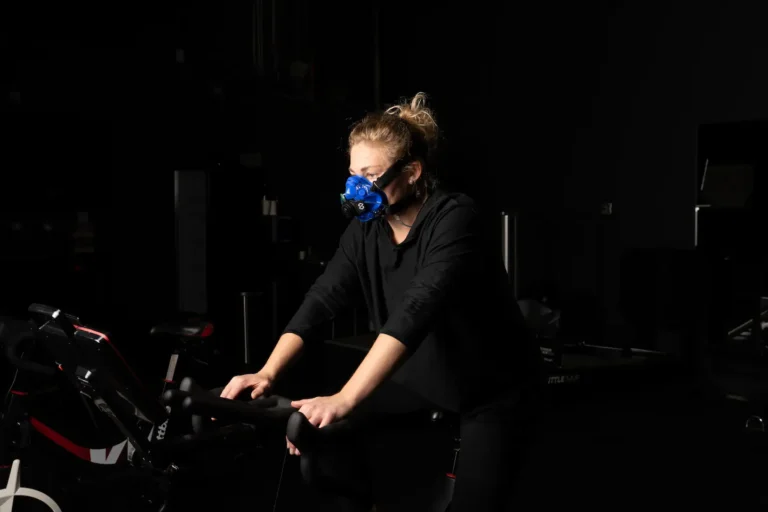
We also recommend taking an RMR test during this period, which will tell you exactly how many calories your body burns at baseline — not an estimate from a formula, not a number a fitness app calculated from your age and weight, but a measured value from your actual breath. That number becomes the foundation for every nutrition decision you’ll make in 2027. Without it, you’re guessing.
It also gives you something valuable heading into the new year: a true starting point. When you retest in the spring after a focused training block, you’ll be able to see exactly how your metabolism changed — not based on how you feel, but based on what your physiology is actually doing.
Rest Doesn’t Mean Inactive
Let’s be clear… None of this is an argument for the couch. Movement during the holiday season — walks, recreational activity, low-intensity effort — supports metabolic health, maintains insulin sensitivity, and keeps the aerobic base from eroding. Zone 1 and Zone 2 activity during a rest period can be exactly what your body (and mind) needs to preserve all your hard work. It’s maintenance training for a system you’ve spent months building.
What rest means, metabolically, is a reduction in high-intensity demand — giving your body the conditions it needs to consolidate the adaptations you’ve earned and arrive at January with a fuller tank rather than a depleted one.
Especially if you’re somebody who needs to stay active to keep your sanity, or if your workout is your only “me-time” when the house is full of family and friends, here’s another way to think about it. Peter Attia, a popular physician who focuses on longevity and performance, tells his patients, “Don’t have two bad days in a row. It’s better to have a diet that is 7/10 good than vacillating between 10/10 perfection and 0 out of 10 misery…” In other words, eat the cookie, and savor it. But tomorrow, prioritize protein, fiber, and hydration. The holidays are not a time for guilt, but of gratitude and kindness — even to ourselves.
What to Do With This
If you train seriously, here’s the most useful thing you can do this holiday season: get your RMR tested.
Not so you can obsess over calories. So you can stop guessing. Know your true baseline. Understand how your body is utilizing fuel at rest. Set your 2027 nutrition and training targets on actual data, not estimations.
That way, you’re not moving through the holidays from a place of restriction and self-judgment, but rather with an understanding that that homemade slice of Christmas cake isn’t going to derail you.
And most importantly — rest. Genuinely. Eat well. Sleep more than you think you need to. Let your body do the work that only rest makes possible.
January will come. And when it does, you’ll be ready — not despite having rested, but because of it.
Looking for that RMR test?
SpiroFit’s resting metabolic test measures your RMR and substrate utilization through breath analysis — no blood draws, no lab appointments. Find a SpiroFit practitioner near you or learn more here.
Sources
1. https://www.telegraph.co.uk/health-fitness/conditions/ageing/how-to-be-healthy-over-60-peter-attia/

Written by
Sendsor GmbH, Germany
The SpiroFit team has worked with fitness, wellness and sports professionals around the world.

Discover the SpiroFit device
SpiroFit provides portable metabolic analysis, including VO2max, thresholds, and resting metabolic rate, for sports centers, clinics, and coaches.
Latest articles







We are always ready to help
Start enjoying all the benefits of SpiroFit for you.
If you are a customer in the United States, click here for instant purchase options.